Digitizing a business in the Balearic Islands: where to start
When your business revolves around seasonality, digitization isn't about buying bloated software. How to pick the first process, measure it, and automate without halting operations.
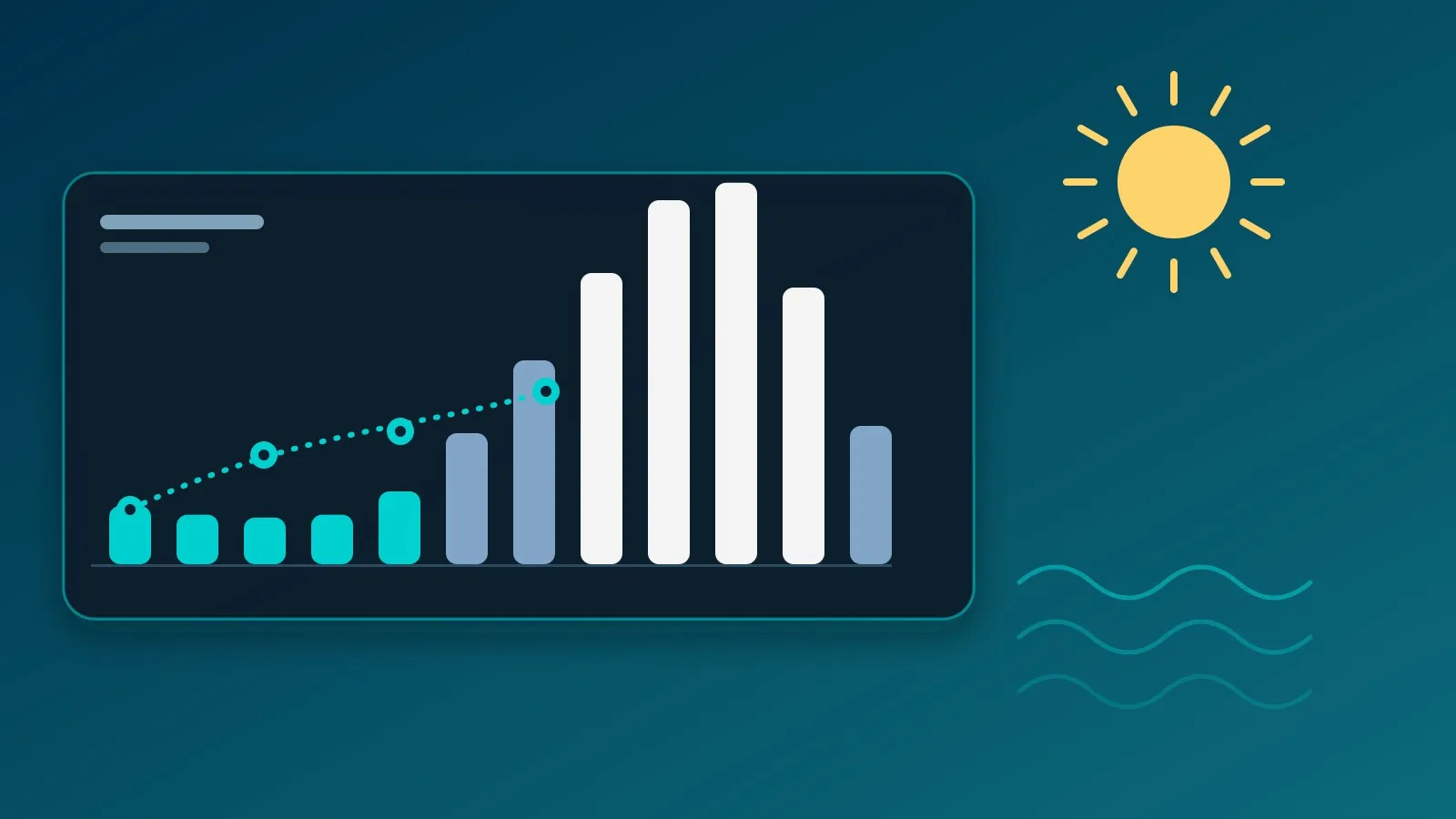
We engineer software from Alcúdia, Mallorca, and we understand the regional reality firsthand: companies across the Balearic Islands experience two distinct operational environments every year. During the peak summer season, operational volume explodes across the board (vendor invoices, staffing turnover, maintenance tickets, customer bookings). In winter, calm returns to rethink strategy, but revenue drops to fund major capital projects.
Consequently, any digital initiative in the region must satisfy two non-negotiable operational requirements: it must be fully battle-tested before the high season begins, and its rollout must never disrupt daily customer operations.
The most common mistake: starting with software tooling
“We need an ERP” or “we should integrate AI” are typical starting statements, but they rarely lead to successful outcomes. The proper starting point is always a concrete, painful bottleneck. To identify it, examine these questions:
- Which repetitive task consumes the most manual staff hours during peak season?
- Where does operational data get dropped between disconnected teams or legacy tools?
- Which operational errors recur most frequently, and what do they cost to rectify?
- Which core business workflows still rely on spreadsheets passed back and forth over email?
Production bottlenecks we encounter repeatedly
Seasonal supplier invoices. A restaurant, hotel, or logistics hub can jump from a handful of supplier invoices per week to dozens per day. Accounting staff must manually parse line items, verify delivery notes, and key records into general ledgers. This is precisely the operational task suited for automated extraction with human verification. Our AI purchasing agent was engineered specifically for this load—we detail the economics in how much does it cost for AI to read an invoice. Furthermore, mandatory B2B electronic invoicing legislation (such as Ley Crea y Crece in Spain) will require standardized digital billing compliance, making early adoption a strategic safeguard.
Facilities and equipment maintenance. Hotels, residential communities, marinas, and industrial facilities manage extensive physical assets requiring scheduled preventative checks, emergency repairs reported over chat groups, and spare parts inventories that nobody tracks reliably. A dedicated CMMS work order system tracking asset maintenance history fundamentally transforms the responsiveness of operations teams.
High-velocity seasonal hiring. Publishing seasonal job listings, receiving hundreds of candidate CVs across five different channels, and coordinating rapid interviews within tight timeframes. Centralizing recruitment pipelines cuts administrative overhead and prevents losing top talent to competitors.
Disconnected legacy data silos. The point-of-sale (POS) terminal runs in isolation, accounting lives in desktop software, and bookings sit in an external SaaS—requiring manual data re-entry every night. Robust, purpose-built integrations eliminate clerical errors and eliminate hours of redundant data entry.
A four-step implementation framework
1. Isolate a single process. Choose the single bottleneck causing the most friction and whose outcome can be quantified cleanly. Tackle one workflow, not five simultaneously.
2. Measure the current baseline. Quantify how many hours it consumes, how many transactions occur per month, and the frequency of errors. Without baseline measurements, calculating ROI after rollout is impossible.
3. Build the minimum solution that fixes the bottleneck. Avoid multi-year monolithic enterprise systems. Focus on lightweight, reliable tooling that integrates directly with your existing POS or accounting software rather than attempting to replace everything at once.
4. Deploy in the low season and fine-tune ahead of the peak. Use winter months for stress testing and staff onboarding. Use spring to iron out edge cases. By summer, the pipeline runs autonomously without management intervention.
Once the initial process succeeds, subsequent automations become substantially easier: teams trust the technology, and foundational data structures are already clean and normalized.
Custom software vs. off-the-shelf software
Custom development is not universally required. If an existing off-the-shelf tool solves your problem without extensive workarounds, it is almost always the more cost-effective choice. Custom software development is justified when:
- Your process represents your core competitive differentiator, and you refuse to compromise it to fit generic software constraints.
- You must integrate several disparate systems that lack native connectors.
- Commercial SaaS options force you into expensive enterprise tiers charging for unused features.
A core principle of our consulting practice is giving you an honest appraisal, even when that means advising you not to build custom software. For a comprehensive decision framework, read our guide on custom software or off-the-shelf product: how to decide without regrets.
Local engineering presence, global capabilities
Based in Mallorca, we can visit your facilities, observe your team’s day-to-day workflow, and understand your peak operations from the inside. For everything else, we build and support systems remotely for companies anywhere.
Key takeaways
- Focus on a specific operational bottleneck, not an abstract technology buzzword.
- Benchmark your current operational metrics, build the leanest effective solution, and deploy during the quiet season.
- Avoid over-engineering: off-the-shelf tools or lightweight custom integrations often deliver faster ROI.
Planning to optimize your business operations ahead of the upcoming season? Tell us which process drains the most time, and we will outline how to approach it with engineering discipline.
Related articles
How much does it cost for AI to read an invoice (and how we cap it)
The real cost of automating invoices with AI isn't just tokens. How we measure per-operation cost, the levers that lower it, and why human review is part of the formula.